Abaya vs Kaftan: What's the Difference and When to Wear Each
Abayas and kaftans are both modest, flowing and elegant, which is why they're often confused. But they differ in cut, feel and the occasions they suit best. Here's a simple breakdown to help you choose.
What is an abaya?
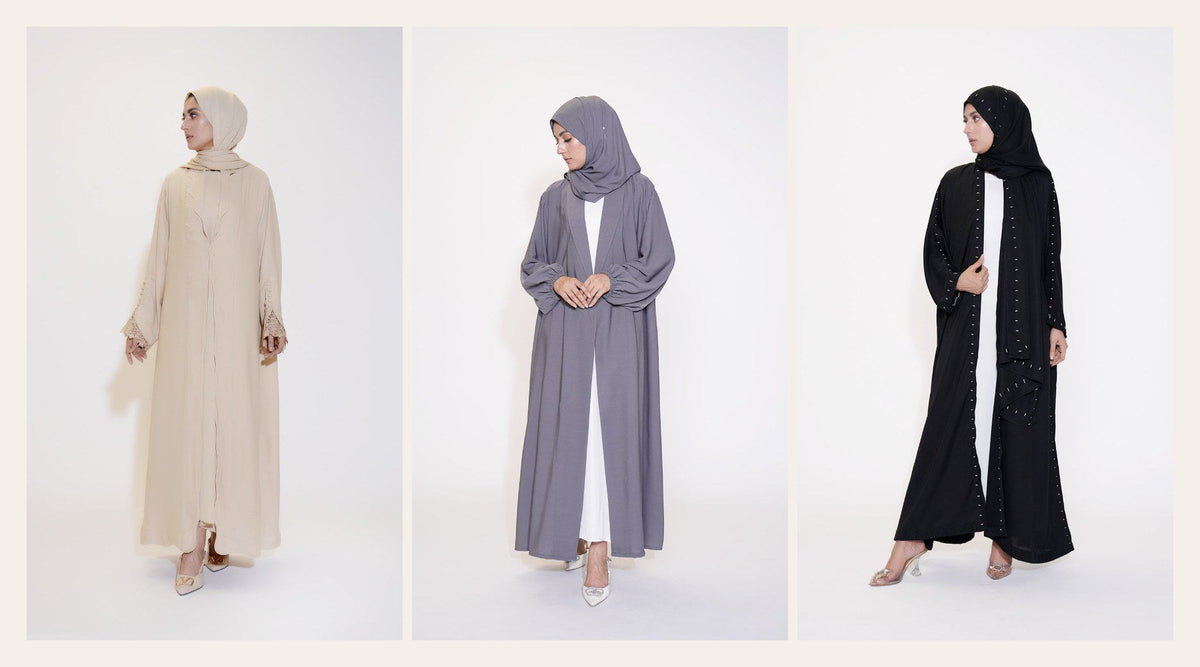
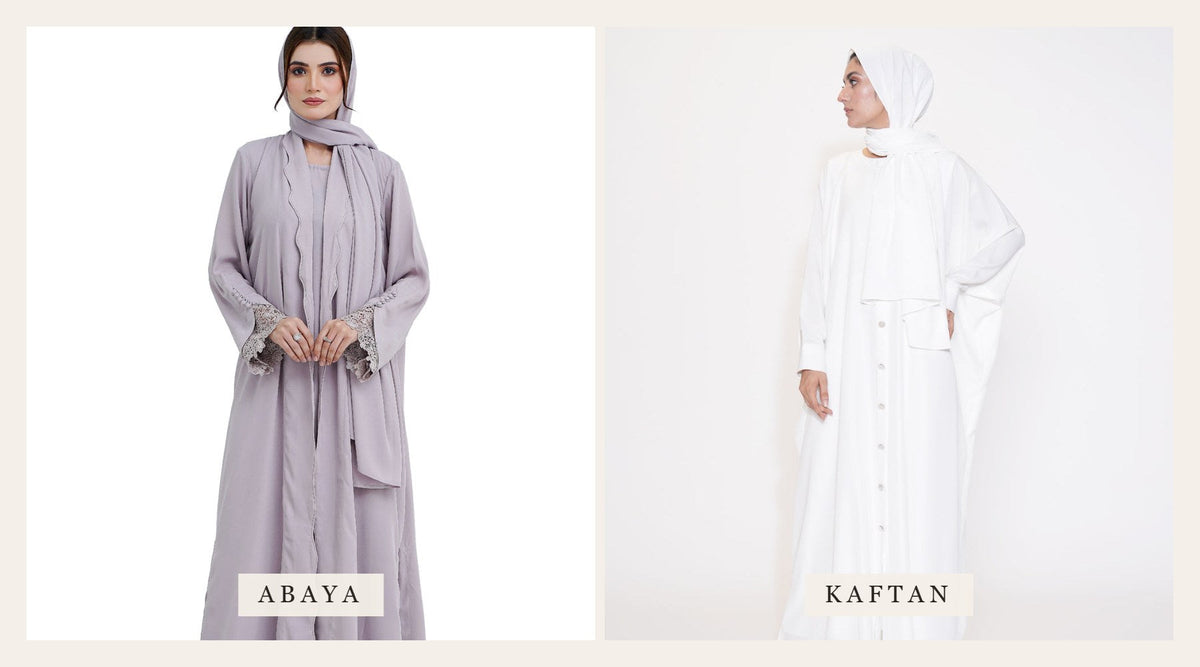
An abaya is a full-length outer garment worn over clothing. It's typically more structured than a kaftan, with defined sleeves and a cleaner silhouette. Many modern abayas, including several Ozen styles, are front-open and paired with a sleeveless inner gown, so you can wear them open as a layered look or closed for full coverage.
What is a kaftan?
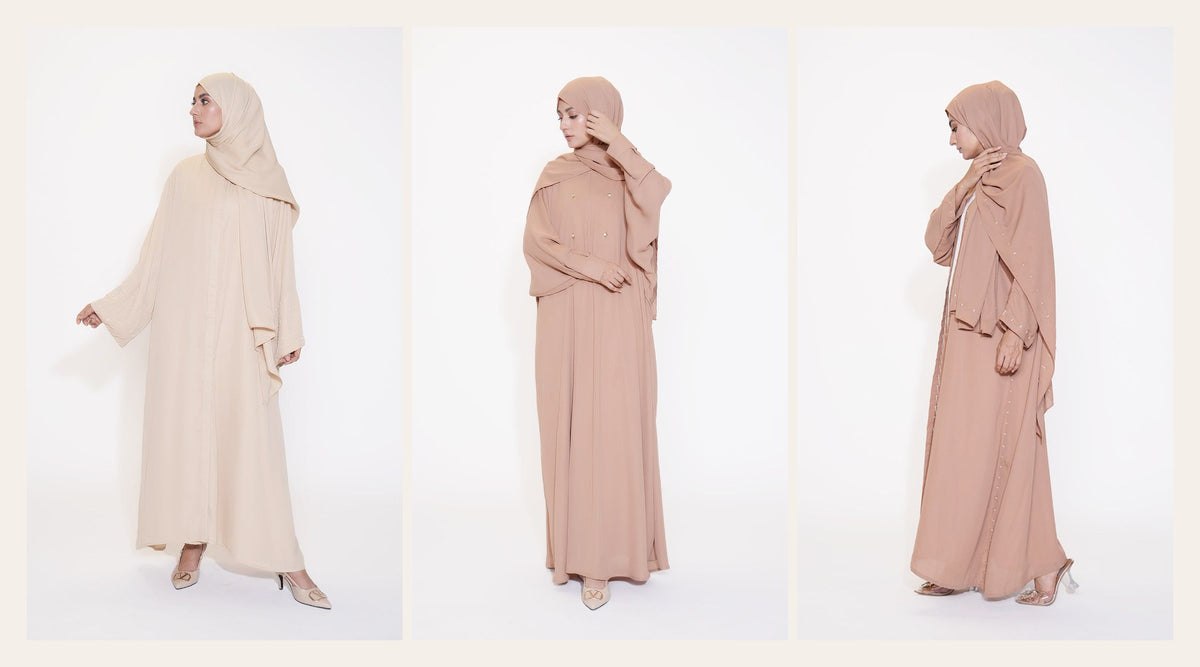
A kaftan is a loose, relaxed garment, usually with wide dolman sleeves that are cut as part of the body rather than set in at the shoulder. The result is an easy, flowing shape that drapes rather than holds its structure.
The key differences
- Silhouette: abayas are more tailored; kaftans are looser and more relaxed.
- Sleeves: abayas usually have set-in sleeves; kaftans have wide dolman sleeves.
- Layering: abayas are often worn over an inner gown or outfit; kaftans are usually worn as a single piece.
- Feel: abayas feel polished and put-together; kaftans feel effortless and comfortable.
When to wear an abaya
Choose an abaya when you want a refined, structured look: work, formal gatherings, Eid, weddings or any time you want your outfit to feel polished. A front-open abaya with an inner gown gives you two ways to wear it.
When to wear a kaftan
Choose a kaftan when comfort comes first: everyday wear, travel, relaxed get-togethers or warm days. Kaftans can also be dressed up with accessories for an occasion.
Can't decide?
Many women keep both in their wardrobe: an abaya for polished moments and a kaftan for easy days. Explore our abayas and kaftans, with Cash on Delivery and free delivery across Pakistan in 5–7 working days.